

 Roof orientations, rated by the van
Father & son · Cheshire
Own your energy.Solar panel installers in Cheshire Battery storage EV charging
Based in Ellesmere Port, we install solar panels, batteries and car chargers across Cheshire and the North West — with honest advice and no hard sell.
- Ellesmere PortWhere we’re based
- Survey firstBefore anything is designed
- A couple of hoursTo hear back from us
 MCScertificate NAP-71179
 NAPITcertification body
 Tesla Powerwallcertified installer
What we fit
Four things, done properly.
Solar panels, battery storage, EV chargers — and batteries added to solar you already have. Each one designed around your roof and your bills, and surveyed before anything is quoted.
-
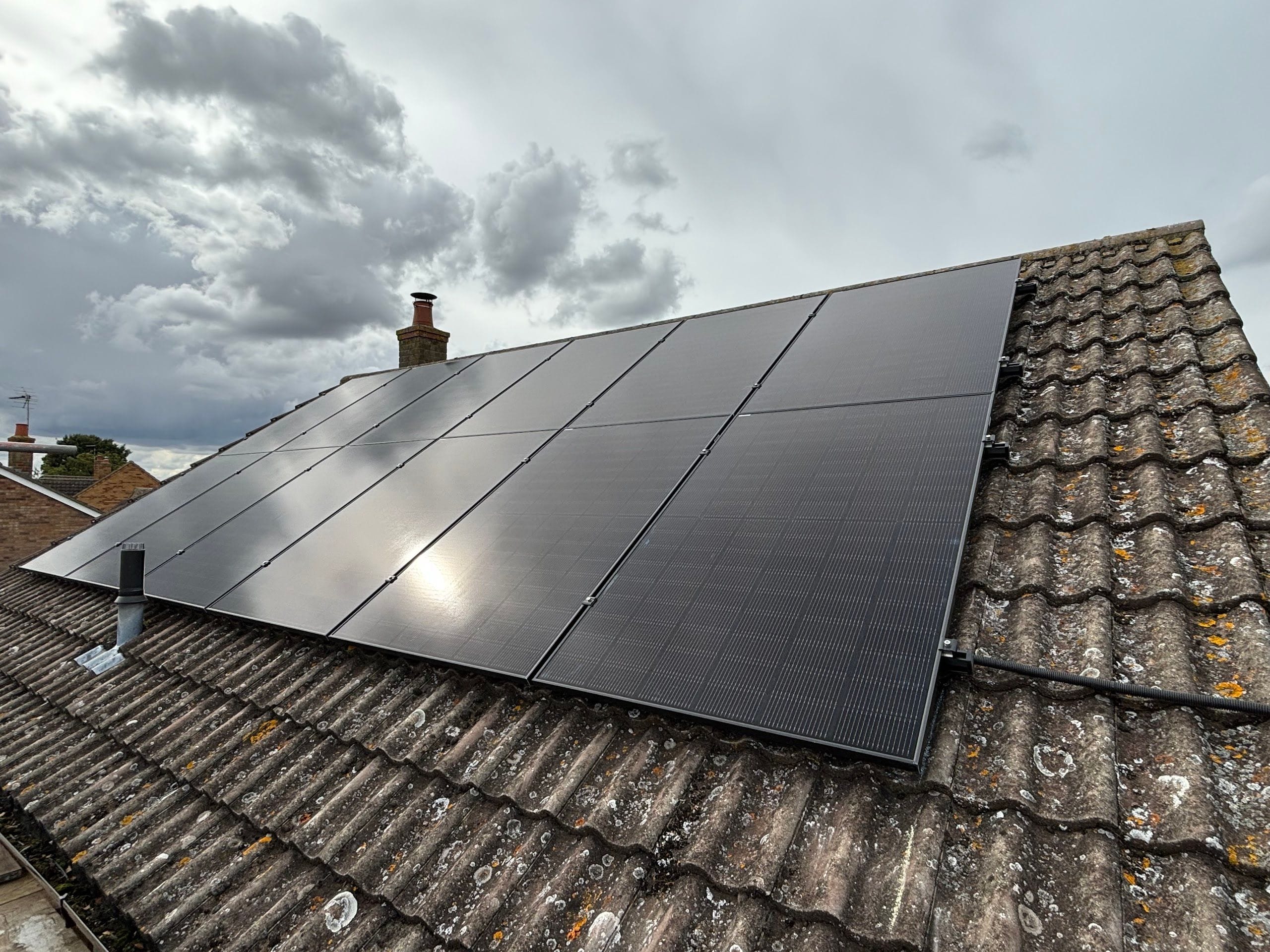
01
Solar PV
Panels chosen for the roof you actually have — its direction, its shading and the space on it — after a proper look at the house and your bills.
- Survey first
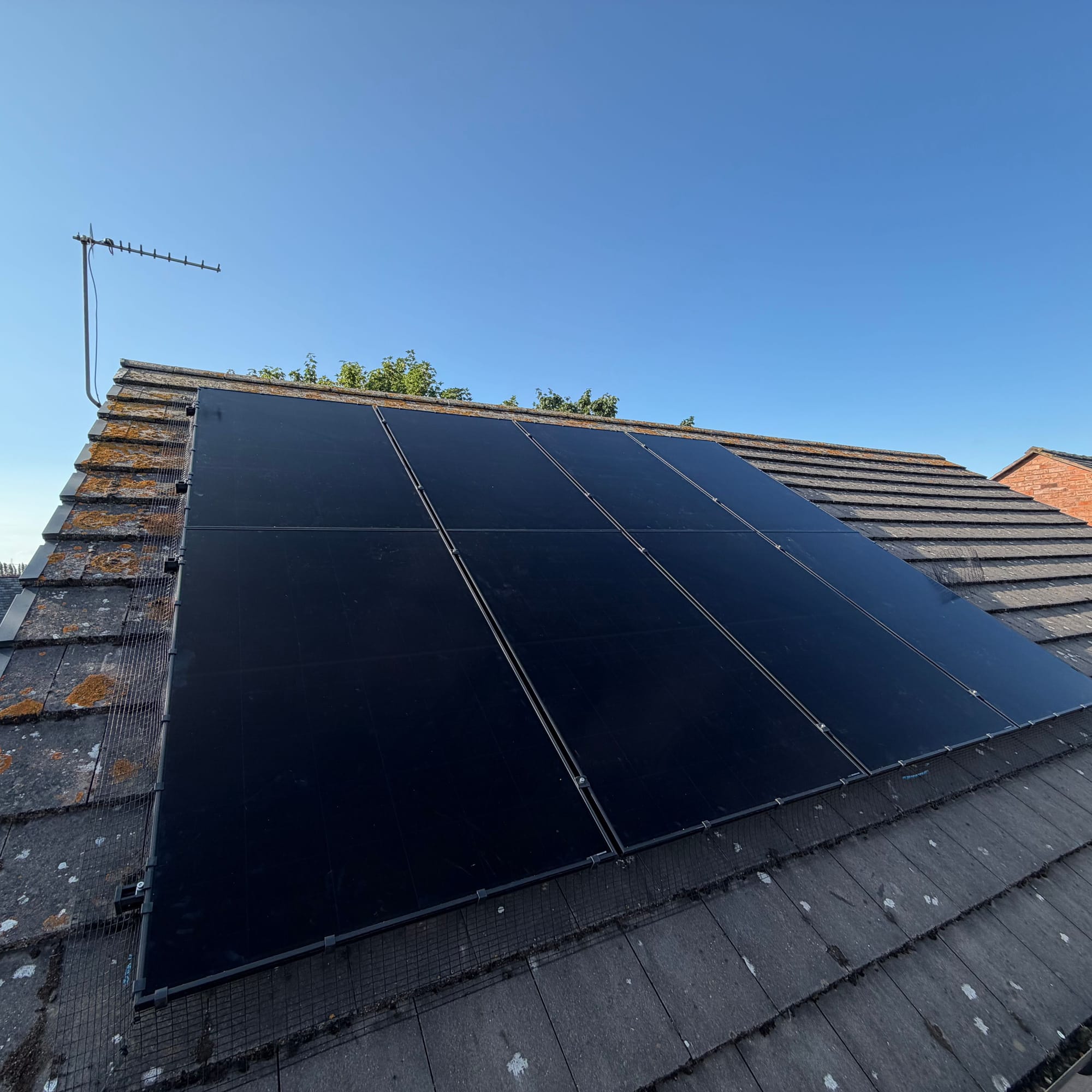
- Bird mesh where it’s needed
- App set up with you
-
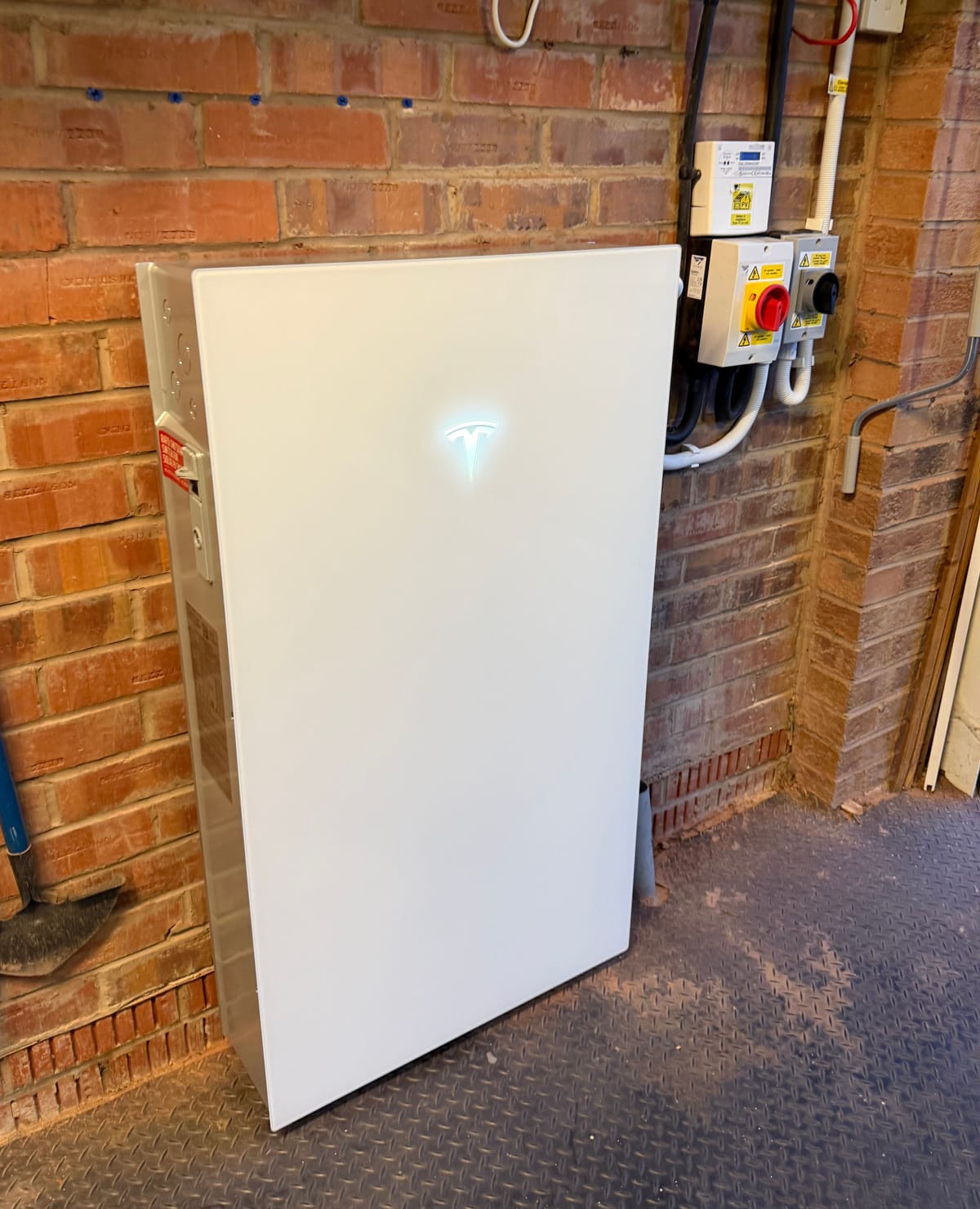
02
Battery storage
Keep what the roof makes at midday and use it in the evening, when electricity costs more — and keep the house powered through an outage.
- Tesla Powerwall
- Fox ESS
- EcoFlow
-
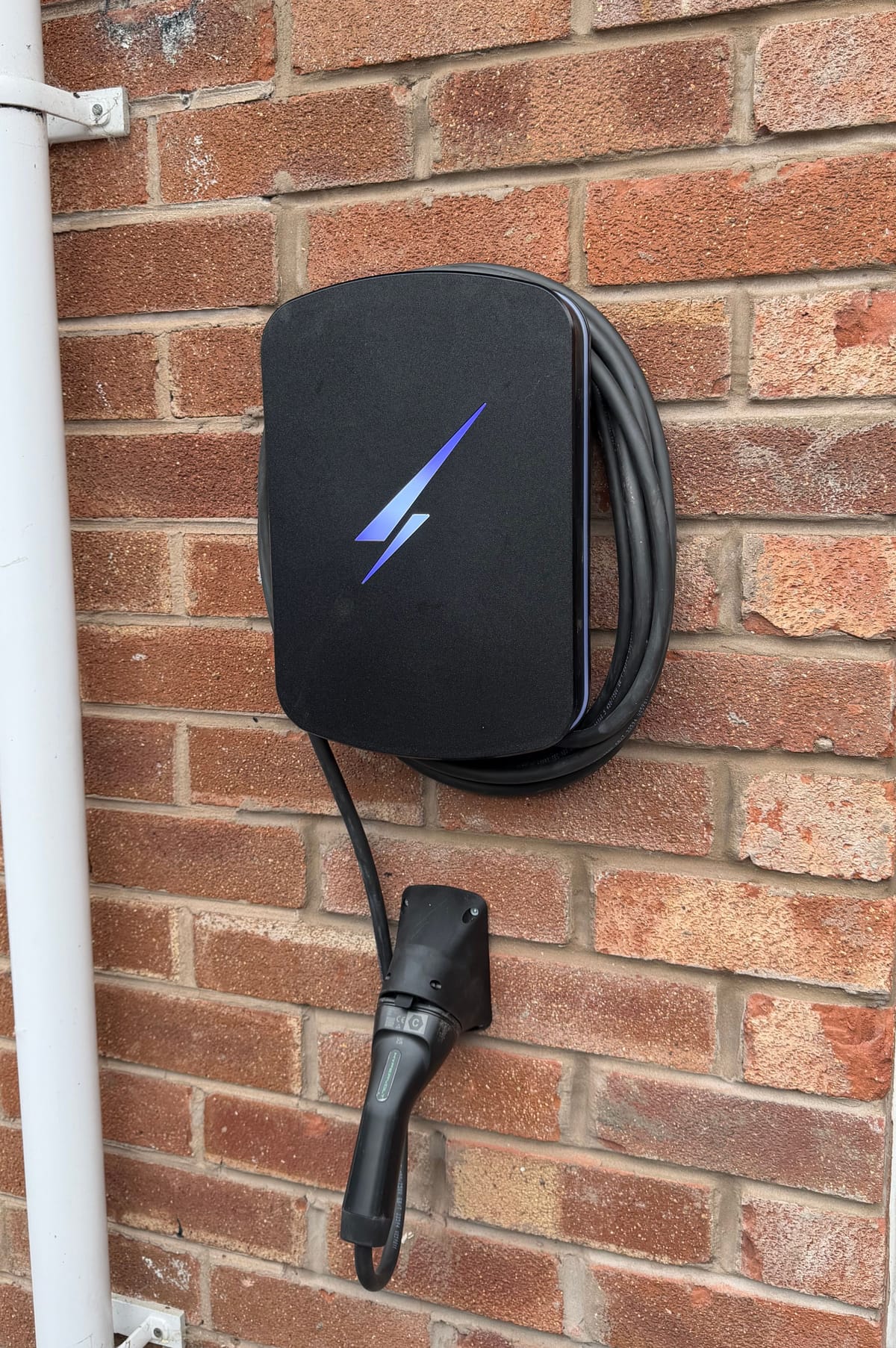
03
EV charging
A home charger that fills the car on sunshine when the roof is making it, and on the cheaper overnight rate when it isn’t.
- Hypervolt
- Tesla Wall Connector
-
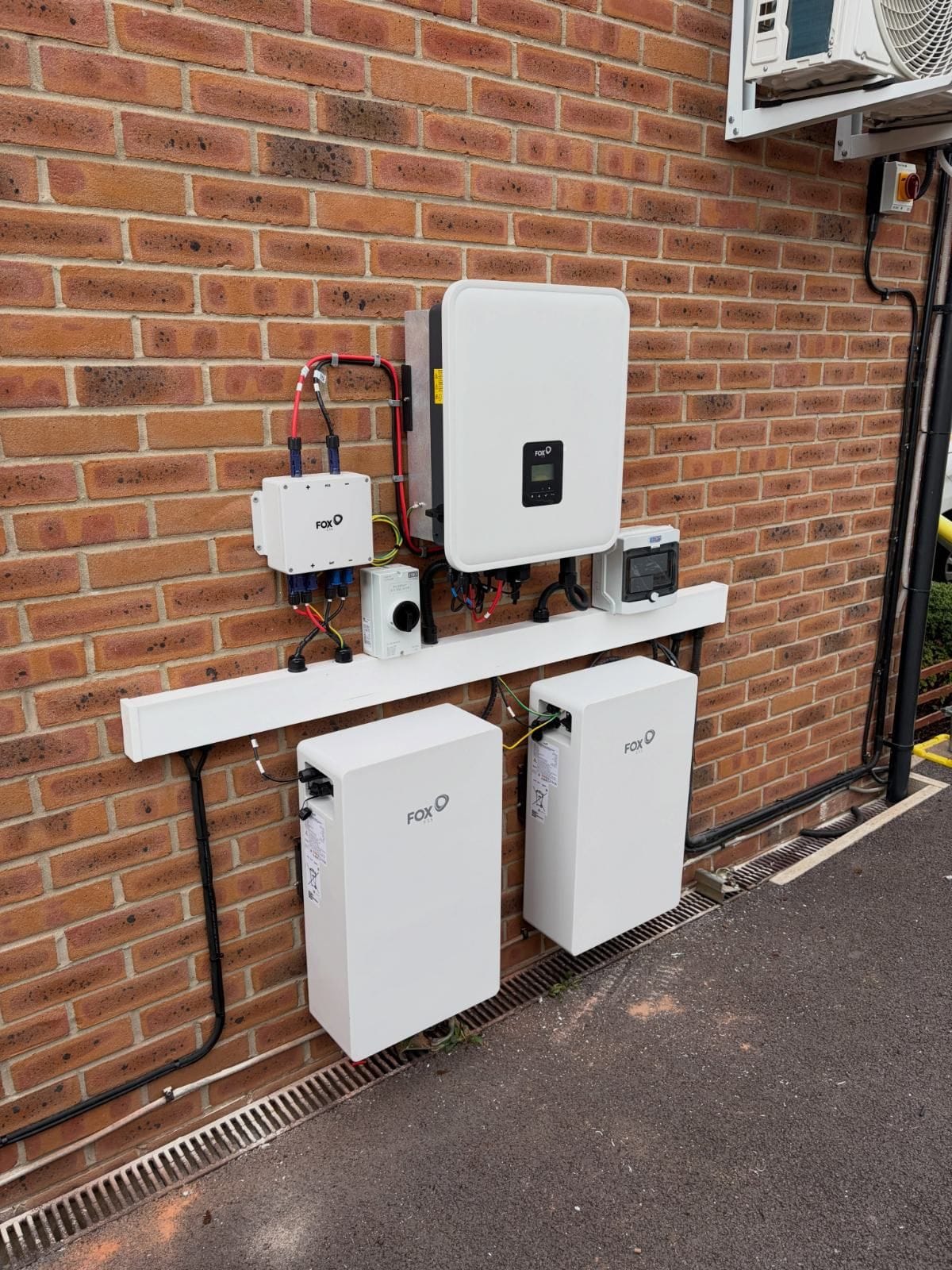
04
Retrofit battery
Already have panels doing nothing for you after four o’clock? A battery added to the system you’ve got stores the daytime surplus for the evening.
- Your panels stay
- Storage for the evening
- Backup power
The roof studio
Turn the house, fill the roof.
A Cheshire semi on a turntable. Drag it round, then tell it about your roof and your house — the panels, the battery, the current running through it and the numbers all move together.
01Your roof
Which way the roof faces
Roof pitch
Shading
02Your house
£120 a month
Home during the day?
Estimated generation
3,870
kWh a year
Estimated saving
£834
a year, saved and earned
Estimated payback
10.1
years
System size
4.40 kWp
Panels
10
Your use covered
58%
Of what the roof generates
Used in the house70% Exported30%
Worked out for a typical Cheshire roof at the pitch and aspect you picked, on a unit rate of 28p and an export rate of 6.5p — rates this tool assumes, dated September 2026, rather than any tariff you have been offered. Nothing here is a quotation: your roof, your shading and how much electricity you use while the sun is up are what the survey settles.
Take the figures with you.
Copy what the studio worked out for your roof, or send it straight to us with a survey request. None of it is a quote: the survey replaces every figure above with your own.
Every assumption behind the numbers
- Unit rate
- 28p for every unit (kWh) you’d otherwise buy from the grid.
- Export rate
- 6.5p for every unit the house and battery can’t use and send back to the grid.
- Your yearly use
- Worked out from your monthly bill at the 28p unit rate, after a standing charge of about 36p a day — and never less than 1,100 kWh a year.
- What a panel makes
- Each panel is 440 W (0.44 kWp). A kWp makes 880 kWh a year facing south, 760 facing east–west and 620 facing north-ish. For this part of Cheshire the EU’s PVGIS model gives 951 for a south roof at a typical pitch — the studio stays below it.
- Pitch
- Shallow (28°) makes 95% of a typical 38° roof; steep (48°) makes 97%.
- Shading
- A bit of shade costs 10%; heavy shade costs 24%.
- How many panels
- Two rows, growing with your bill from three columns to eight — six panels up to sixteen.
- How much you use yourself
- The share of what the roof makes that the house uses: 30% if you’re usually out, 46% in and out, 62% usually home. A battery adds 24 points and a car charger 6, up to 86% — and never more than 62% of your whole year’s use.
- Saving
- The units you use yourself at 28p, plus the units you export at 6.5p.
- Payback
- The yearly saving set against what a system like the one you’ve built typically costs to install: a base figure, an amount for each panel, and more again for a battery or a charger. The answer is held between 4 and 25 years. The studio never shows that cost, because only a survey can price your roof — so treat the years as a rough guide, not a figure to hold us to.
Monthly and yearly sunshine for this area: PVGIS 5.2, EU Joint Research Centre. The unit rate, the export rate and the standing charge are the studio’s own assumptions, set in September 2026 — not a tariff we have quoted you. Your own rates are on your bill, and a survey works from those.
Straight from the roof
The jobs, as they happen.
Short films from the van and the roof — Andre talking through roof directions, batteries and what’s worth doing. There are more on Instagram.
Roof orientations, rated by the van  Three reasons for solar and a battery
 Mid-renovation? Fit it now
 Talking it through by the van
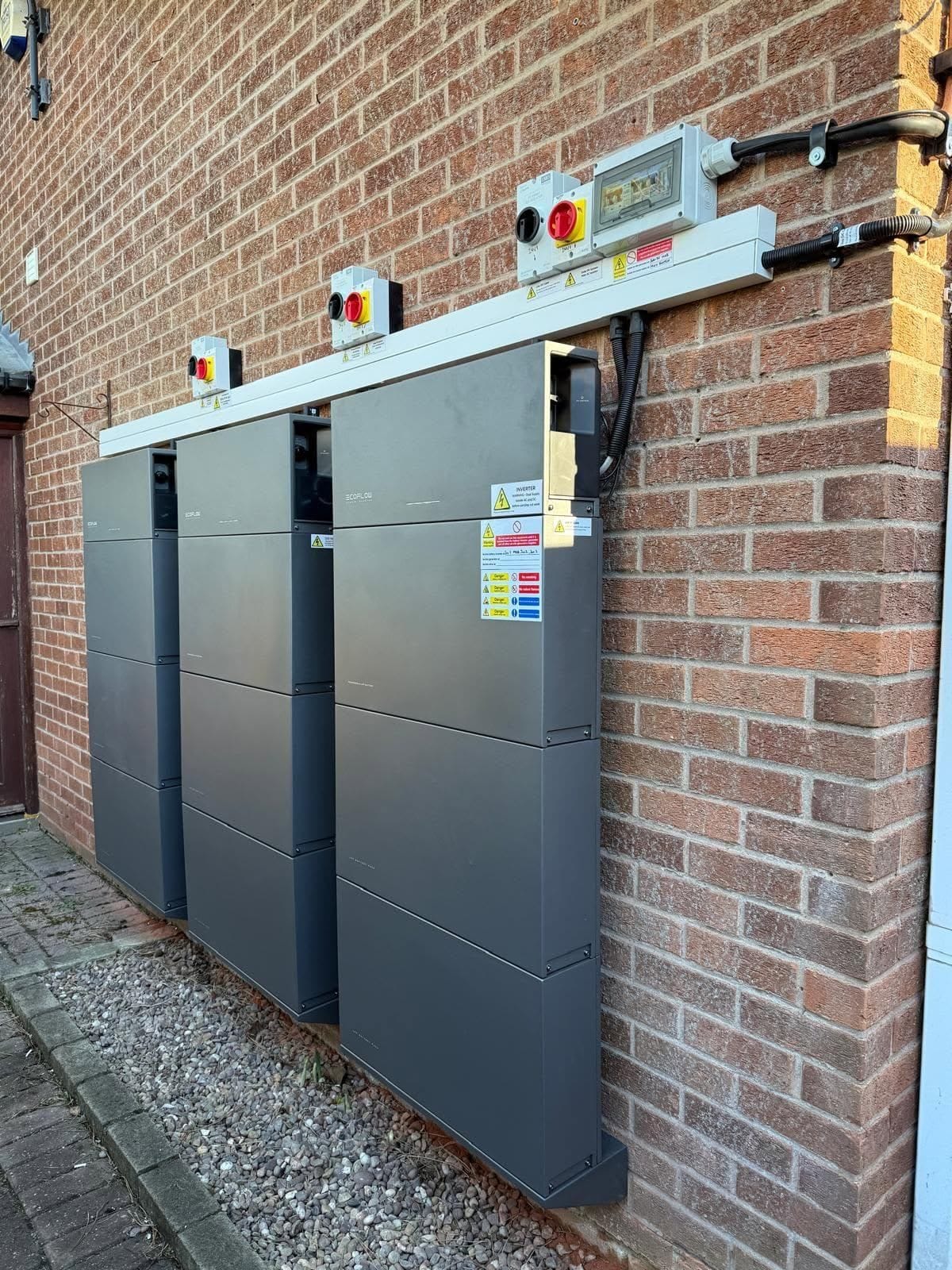
 A home battery, cabled on the wall
Why solar
Four reasons solar still adds up in Cheshire.
Not a sales pitch — the four things that actually make a roof worth doing, in the order we’d put them.
-
Use what you make
Every unit your roof makes and your house uses is a unit you never have to buy. That is where most of the value sits — not in exporting, in not importing.
-
Keep the daytime for the evening
A battery holds the midday surplus for six o’clock, when the kettle, the oven and the telly all come on at once and the grid is at its busiest.
-
Get paid for the rest
Whatever the house and the battery can’t use goes back to the grid, and under the Smart Export Guarantee you can be paid for every unit of it.
-
Very little to look after
Panels have no moving parts. Rain does most of the cleaning, and the monitoring app shows you what the system is doing every day.
Make it on your own roof. Spend it in your own house.
That’s all owning your energy means. Everything below is how we’d do it for yours — or start with what we fit.
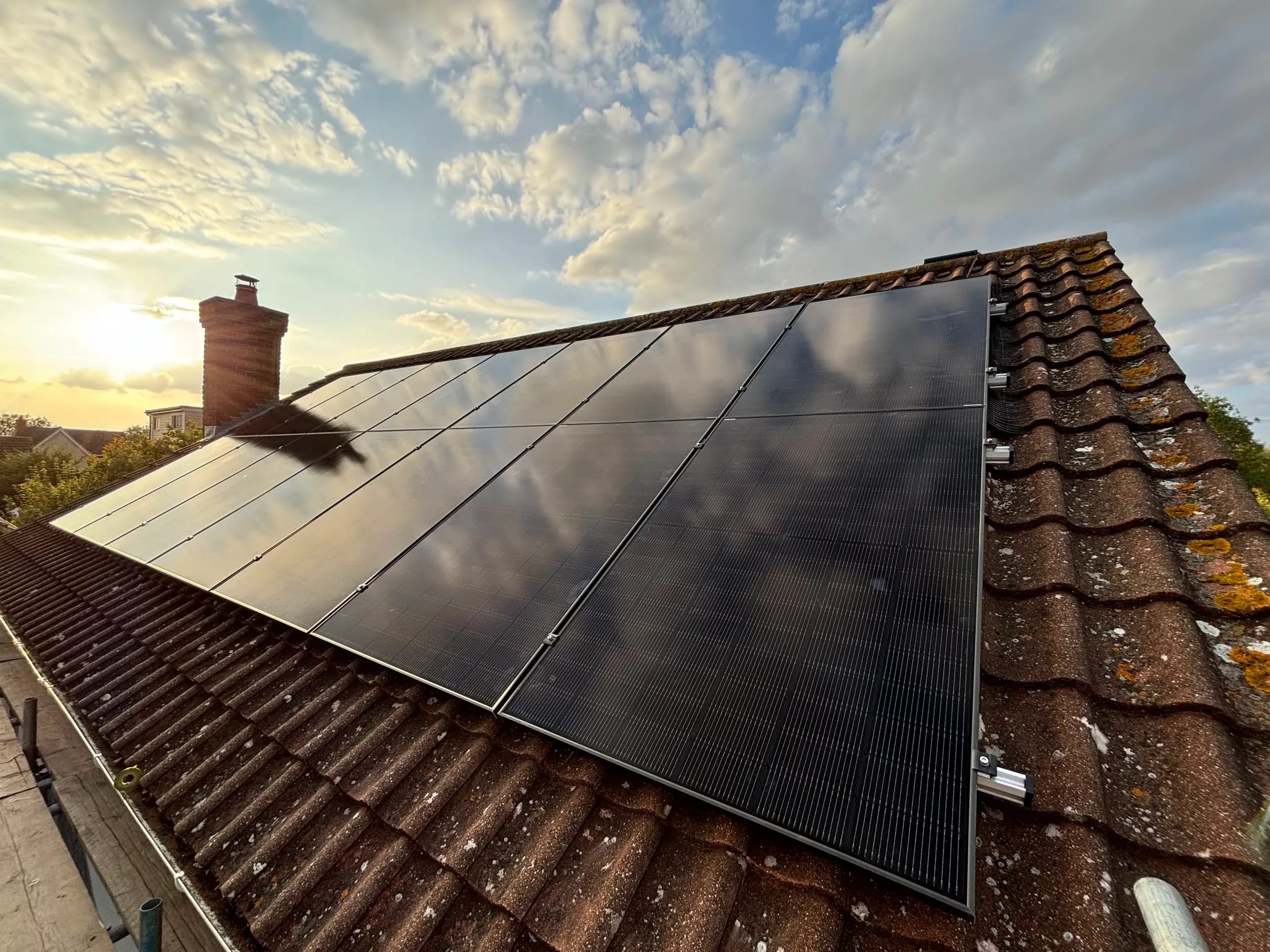
One of our own roofs
Sustainable clean power serving Cheshire and surrounding areas.
More of our workA year on a Cheshire roof
The summer carries the year. The winter still turns the meter.
What the roof studio’s default house — 10 panels, 4.4 kWp, facing south — makes month by month. We’d rather you saw December now than found it out in your first winter.
0
200
400
December makes about a quarter of what May does.
| Month | kWh |
|---|---|
| January | 140 |
| February | 220 |
| March | 350 |
| April | 450 |
| May | 490 |
| June | 460 |
| July | 460 |
| August | 420 |
| September | 350 |
| October | 240 |
| November | 160 |
| December | 130 |
“No Aggressive Approach, No Limited-Time Discounts, just honest advice which many forget to provide in the industry.”
Before you ring
What you can check from the ground.
No ladder needed. A few minutes in the garden answers the questions a survey starts with — and makes the first phone call a lot shorter.
Check 01
Which way it faces
Stand in the garden at midday. If the sun is over the roof you’re thinking of, it faces somewhere between south-east and south-west — the best case. East and west roofs split the day and still work well.
Check 02
What shades it
Look at the roof at nine, at one and at four. Note anything that throws a shadow across it — a chimney, a dormer, next door’s conifer. Shade costs more than facing the wrong way.
Check 03
The state of the covering
Slipped or cracked tiles, a sagging ridge, moss thick enough to lift a slate? Panels sit on a roof for a long time, so if the covering needs work, it’s better done first.
Check 04
When the house is occupied
Who’s home in the day? A house that’s empty until six uses less of the power while the roof is making it — which is exactly the gap a battery fills.
The survey
We look at the house before we design anything.
Every job starts with a consultation and a proper assessment of the property and your energy use. This is what that assessment covers.
The direction and the pitch
Which way each roof slope faces and how steep it is. A few degrees either way changes what an array makes over a year.
The shading, through the day
Chimneys, dormers, aerials and trees — and where their shadows fall, including in winter, when the sun sits low.
The roof and the space on it
How much of the slope is clear to use, and the state of the covering the panels will sit on.
The consumer unit
Whether your board can take the new circuits as it is, or needs work first. Better to know before the install than halfway through it.
Where the kit will live
A short, sensible cable run for the inverter and battery, somewhere dry and ventilated, with every isolator where you can reach it.
How you actually use electricity
Last year’s bills, who’s home in the day, whether there’s a car to charge. It’s how a system gets sized to your house rather than to a brochure.
How it works
From first call to switch-on.
The consultation, the assessment, the installation and the paperwork — in that order, with Daniel or Andre as the people you deal with.
- First
The conversation
A call, a message or the form: the roof, the bills and what you want the system to do. If it isn’t worth doing, you’ll hear it here. - Next
The survey
We come out, get on the roof and into the loft, then send you the design and the figures in writing. - Then
Installation
The panels, inverter, battery and charger go in, and the whole system is tested before it’s switched on. - Finally
Handover
We register your MCS certificate, file the network paperwork and set up the app with you.
Installation, up close
What happens on site.
How long a job takes depends on the house and the system — your survey says how long yours will be. This is what the work looks like from your side of the front door.
- OutsideScaffold and rails
Scaffold up, rails on
The scaffold goes up and the mounting rails go onto the roof, set out so the rows will sit true.
- Roof and wallThe kit
Panels, inverter, battery
The panels go on and are wired down to the inverter and battery, which go on the wall with every isolator labelled.
- LastIf you’re having one
Charger, switch-on, handover
If you’re having a charger, it goes in now. Then the whole system is tested, switched on, and we go through the app with you.
- ThroughoutAs we go
Tidy as we go
We clear up as we go, and take the packaging and the rubbish away with us.
After we leave
The van goes. We don’t.
What you’re left with once the scaffold is down: a system you can watch working, the paperwork in your name, and a phone number for the people who fitted it.
Who answers the phone
The people who fitted it.
If something in the app ever looks wrong — or you just want to know what a number means — you ring the firm that put it in, and you talk to Daniel or Andre.
0330 133 6441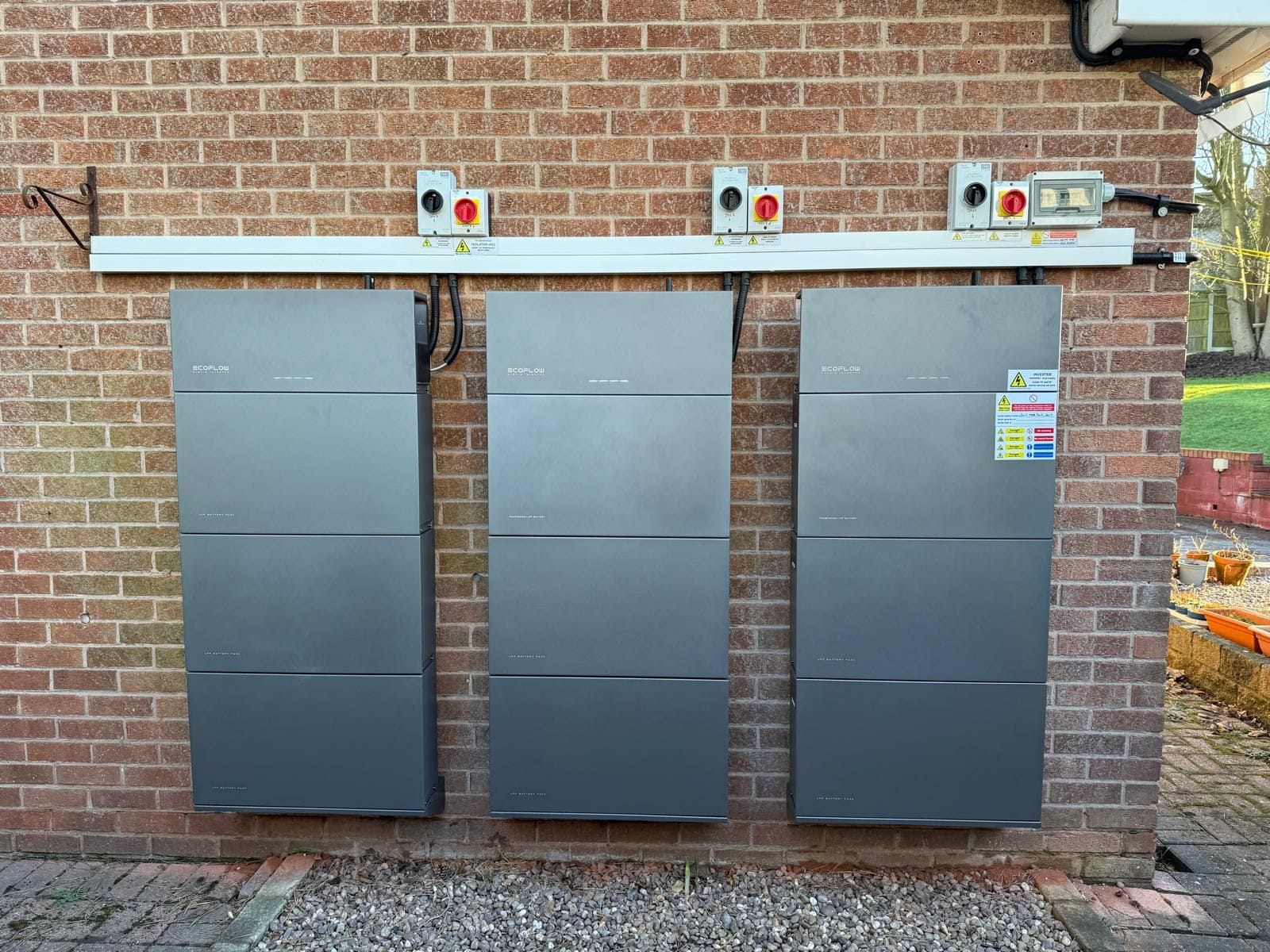
Your app
See what the roof did today
Set up on your phone before we leave: what the panels made, what the house used and where the rest went.
Your paperwork
In your name, in your hands
The MCS certificate and the network operator’s sign-off, registered to you and handed over — not left in a drawer. What the network paperwork is.
Recent installations
Real roofs, ours to stand behind.
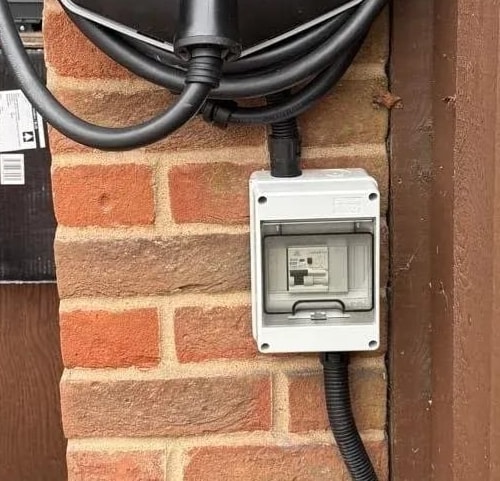
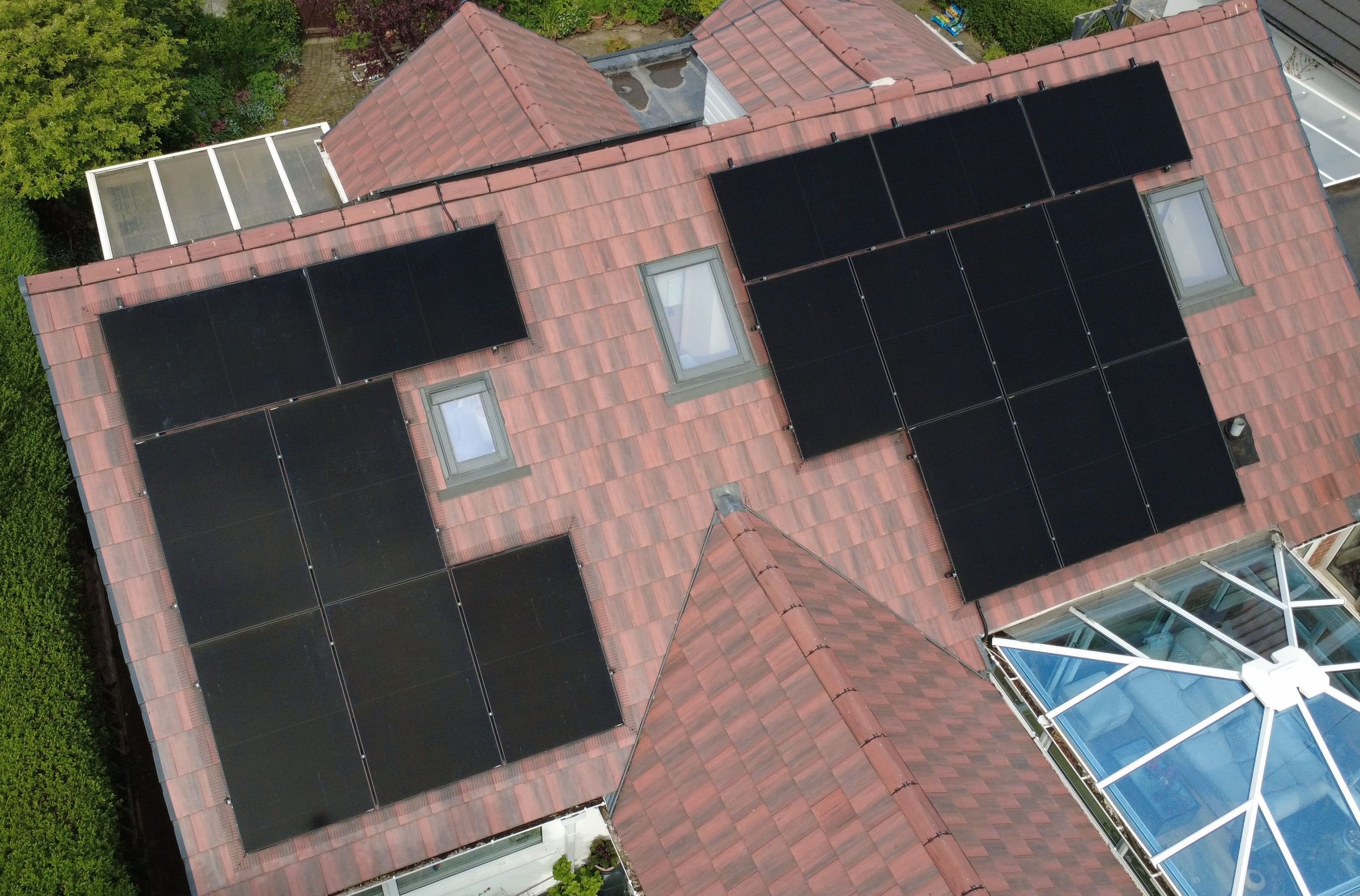
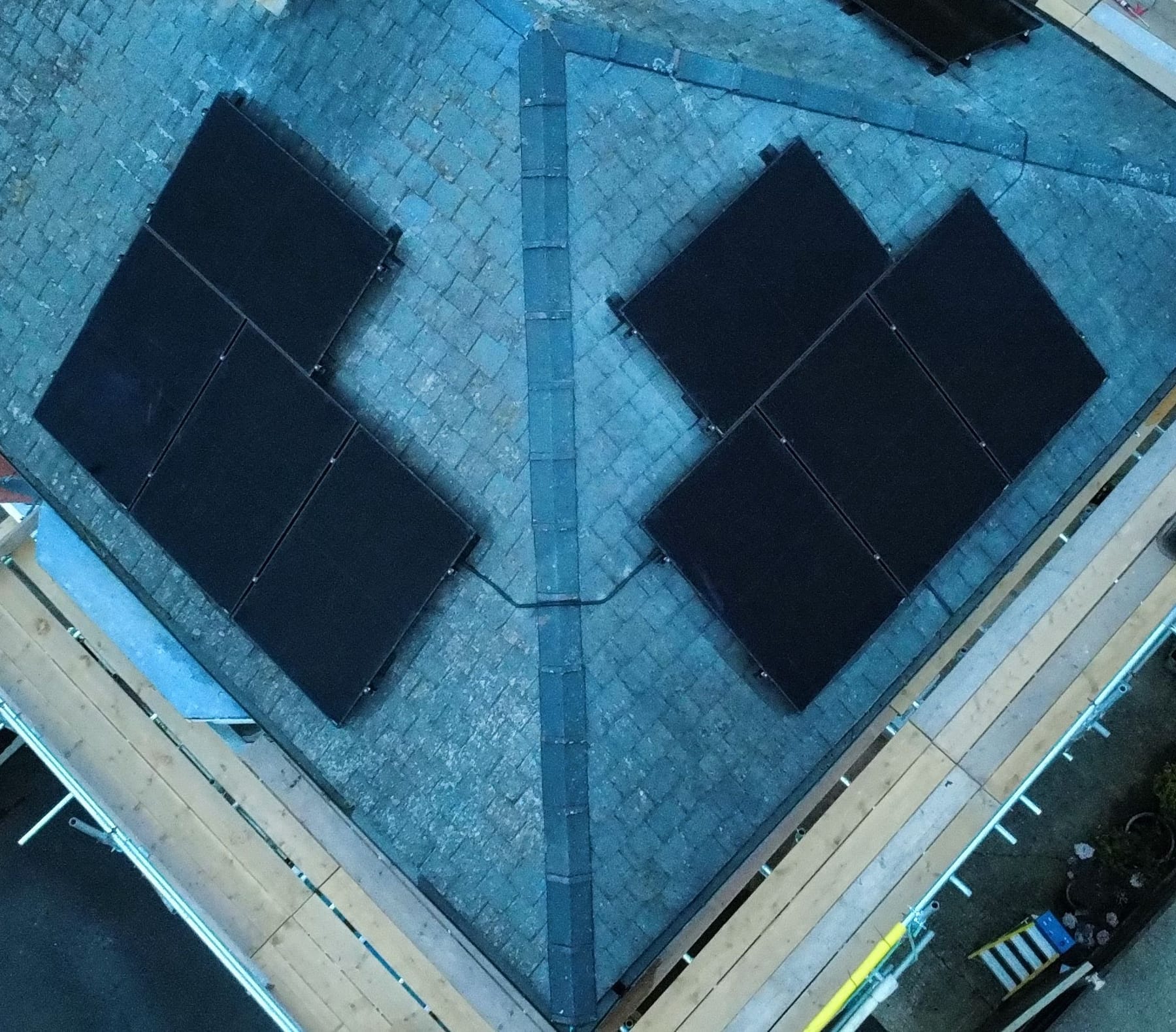
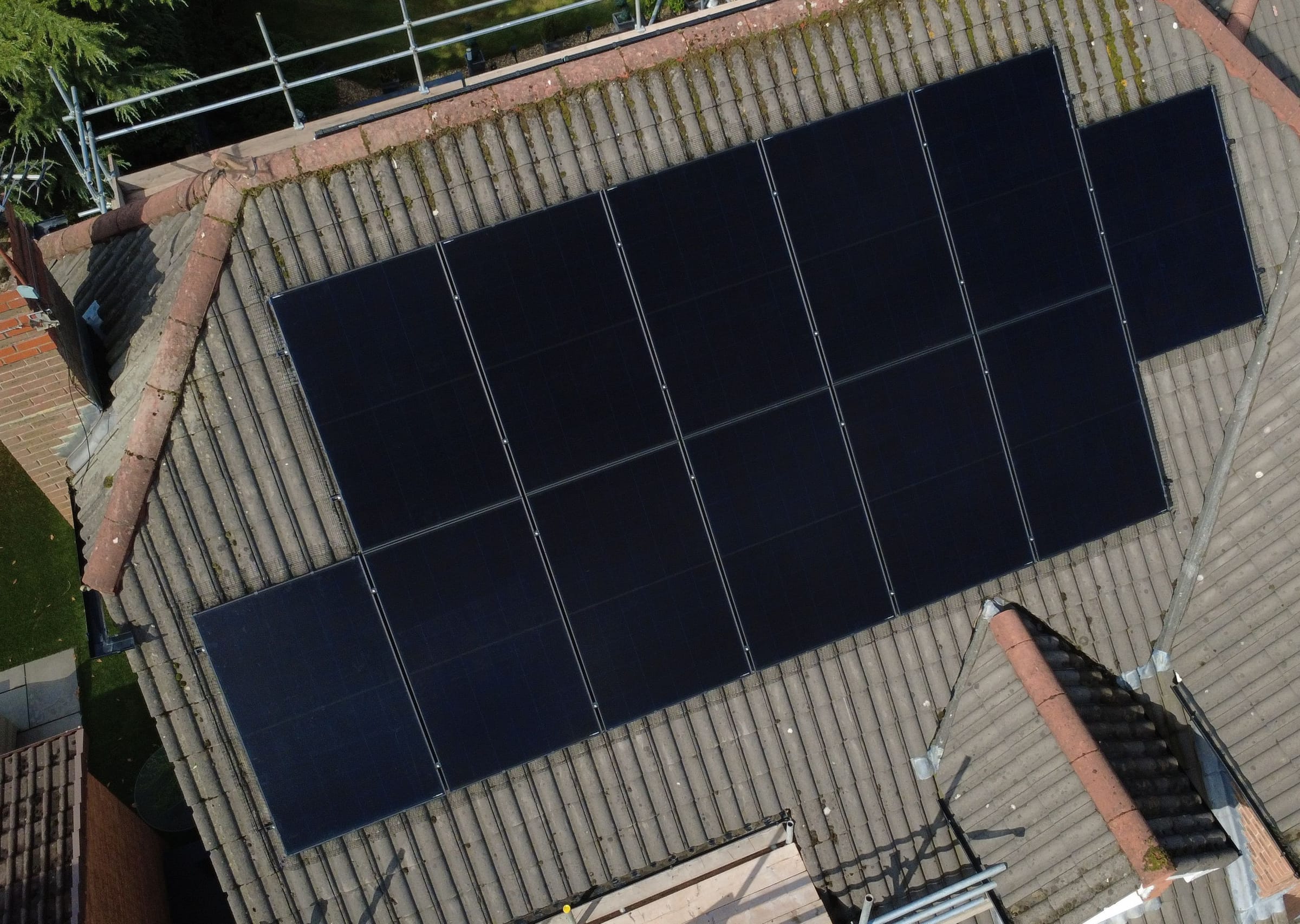
Photographs of our own jobs — the arrays, the kit on the wall and the houses they’re on.
What homeowners say
In their words, not ours.
9 of our Google reviews — solar, batteries, chargers and retrofits between them — word for word.
We’re a family business
Honest advice, properly installed.
We are a father and son from Ellesmere Port. Daniel, an experienced electrician, leads the team; Andre is the name customers mention most in our reviews, from the first survey to setting up the app on your phone.
The paperwork
What each piece of paperwork gets you.
What stands behind the certificate, and the registrations that follow an install.
| What it is | What it means for you | Who checks it |
|---|---|---|
| MCSThe certification scheme for small-scale solar and battery installations. | Your system is designed and fitted to the national standard, and it comes with its MCS certificate — the one your supplier asks for before it pays you for export. The certificate number is on the bar at the top of this page. | Our certification body, through regular assessment of our installs. |
| The certification bodyThe independent body behind our MCS registration — its mark is on the bar at the top of this page. | An independent assessor checks the work that goes on your roof and your wall — not just the paperwork. | Their own assessors, not ours. |
| Network operatorThe G98 notification or G99 application for your system. | Every solar or battery system connected to the grid has to be registered with the local network operator. We submit it and deal with any questions. | The distribution network operator for your area. |
| Smart Export GuaranteeBeing paid for the power you send back to the grid. | You apply to an electricity supplier of your choice; you’ll need the MCS certificate and an export-capable smart meter. Suppliers set their own rates. | Ofgem runs the scheme; the supplier pays you. |
Swipe the table sideways to see every column.
Where we work
From the Dee to the Peak.
Based in Ellesmere Port and serving Cheshire and the North West of England. Every town on this map is within 32 miles of the base in a straight line — from the Wirral and Liverpool to Crewe, Macclesfield and Manchester.
Further afield? We serve clients across England, Scotland and Wales. If you’re not sure, ask and we’ll let you know.
Our base23 Ilkeston Way, Ellesmere Port, Cheshire, CH65 3EF
10 miles20 miles30 miles Liverpool BayDee estuary Ellesmere Port ChesterNestonHelsbyFrodshamRuncornWidnesTarporleyWarringtonNorthwichWinsfordMiddlewichNantwichKnutsfordCreweSandbachWilmslowCongletonMacclesfieldWrexhamMoldBebingtonHeswallBirkenheadLiverpoolWallaseyWest KirbyHoylakeSt HelensSouthportAltrinchamManchesterStockport
Plain English
The words you’ll hear, and what they mean.
6 terms that turn up in most quotes. None of them is as complicated as it sounds.
kWp
Kilowatt peak
The size of a solar array: what the panels would produce together in perfect test conditions. It’s how systems are compared — not what you’ll see on a grey Tuesday.
In your house: the roof studio’s example house comes out at 4.4 kWp — 10 panels.
The questions we get asked
The things worth knowing first.
If yours isn’t here, give us a ring and ask, or see every question.
Most homes can benefit from solar panels, but several factors can impact suitability, such as roof orientation, shading, and available space. During our initial assessment, we’ll evaluate your property to determine if solar is the right choice for you.
Our solar installation process typically includes an initial consultation, a detailed assessment of your energy needs, custom system design, the network operator application, installation, and system testing. We handle every step to ensure your system is set up for optimal efficiency.
Yes. Adding a retrofit battery to your existing solar system is a smart and cost-effective way to get more out of your investment. We install retrofit batteries to boost solar efficiency, cut energy bills, and provide backup power.
As a family-run business, we prioritise customer satisfaction, attention to detail, and a personal approach to every project. We treat each client as a valued member of our extended family and work diligently to provide high-quality, honest, and reliable services.
Simply contact us via phone, email, or our online contact form to schedule an initial consultation. We’ll discuss your needs, provide recommendations, and outline the best plan for your project.
Installing a home EV charger means you can skip the hassle of public charging stations, waking up every day to a fully charged car that’s ready to go. EV charging at home is not only more affordable but also energy-efficient, especially when paired with a solar PV system.
From the blog
Worth reading before you decide.
Plain-English guides to the things that come up on every survey — the paperwork, the batteries and what the roof really earns.
The best home EV charger for you: a buyer's checklist
Not a ranking: our checklist for any home EV charger. Smart rules, cable style, 7 kW or 22 kW, solar modes, load management, PEN protection, tariffs.
Electrifyd · 19 October 2026
EcoFlow PowerOcean explained: packs, usable capacity and where it can go
Electrifyd · 19 October 2026
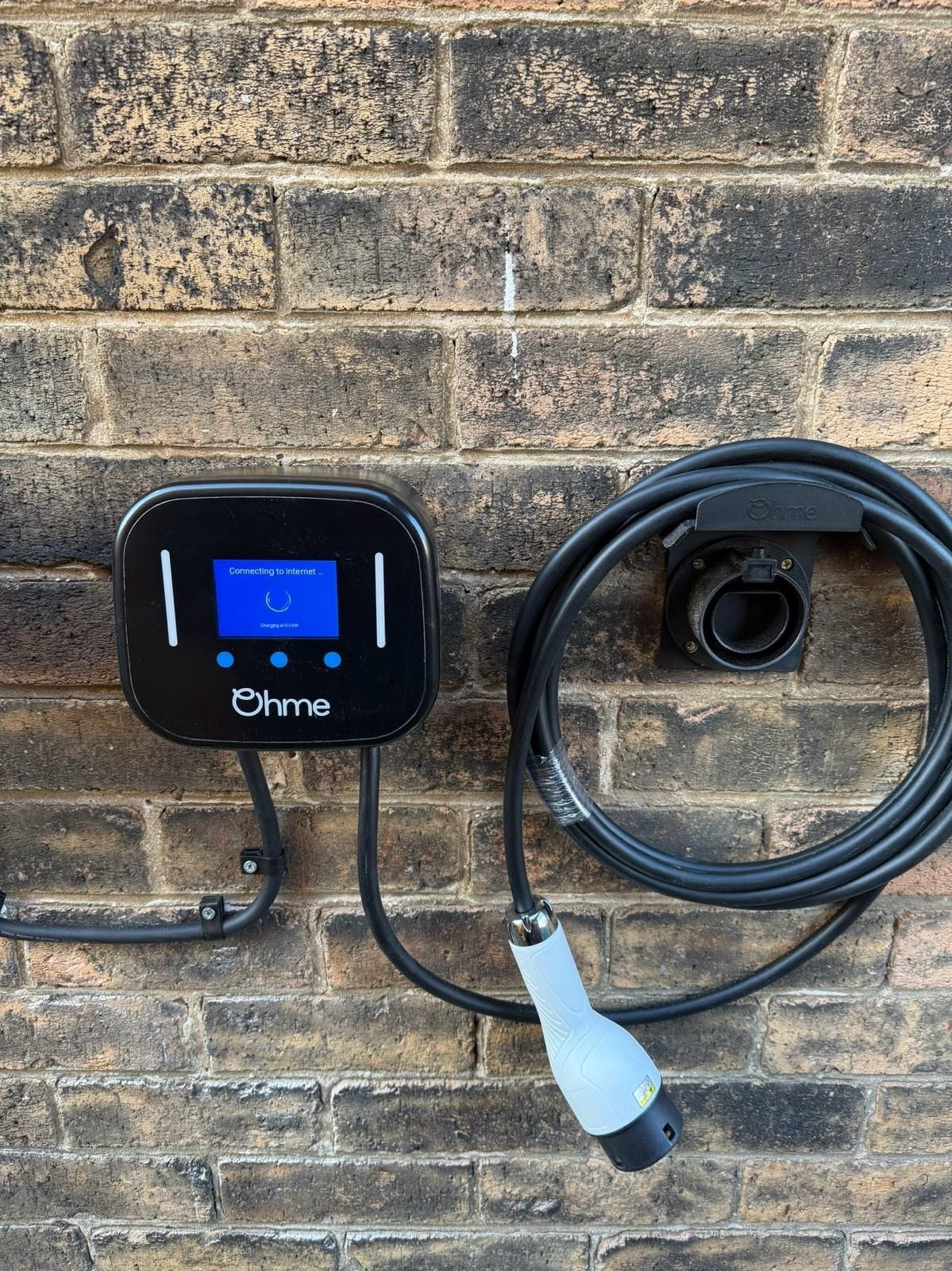
EV charger grants in 2026: who qualifies and who doesn't
Electrifyd · 19 October 2026

Start here
Start with a conversation, not a quote.
Tell us the postcode and roughly what you use. As solar panel installers across Cheshire, we’ll tell you honestly whether the roof is worth doing — and if it isn’t, that’s a perfectly good answer too.
- Takes about a minute
- You get a person, not a brochure
- No obligation, and no visit until you ask for one